Every February, Santiago de los Caballeros transforms. Streets fill with color, music shakes the pavement, and the city’s most iconic characters — the Lechones — take over the avenues in a celebration that has been building for centuries. The Santiago Carnival is not a tourist performance. It is one of the most deeply rooted cultural traditions in the Caribbean, and visiting during carnival month is one of the most memorable experiences you can have in the Dominican Republic.
This guide covers everything you need to know — dates, characters, traditions, where to watch, what to expect and how to plan your stay.
2026 Santiago Carnival — what happened
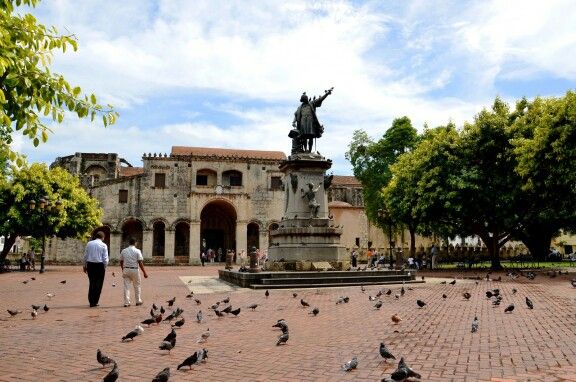
The 2026 edition ran from February 8 through March 1, 2026, with Parque Central as the main stage for the fourth consecutive year. The grand finale on March 1 drew massive crowds that transformed the Parque Central into the main stage of culture, tradition, and tourism in the Dominican Republic. The carnival was broadcast live on YouTube for all four Sundays, reaching an international audience and strengthening its global profile.
The 2026 parade featured the Reina and Rey del Carnaval, the iconic group Los Tuareg lechones, traditional characters like Roba La Gallina, Las Marchantes, and the Egyptian Fantasy comparsa, plus a special guest appearance by Los Guloyas de San Pedro de Macorís — a UNESCO-recognized cultural heritage group.
Central Santiago location · 91 rooms · casino & restaurant · 15 min walk from Parque Central.
📸 @alcaldiadestgo on Instagram
The Lechones — Santiago’s iconic carnival character
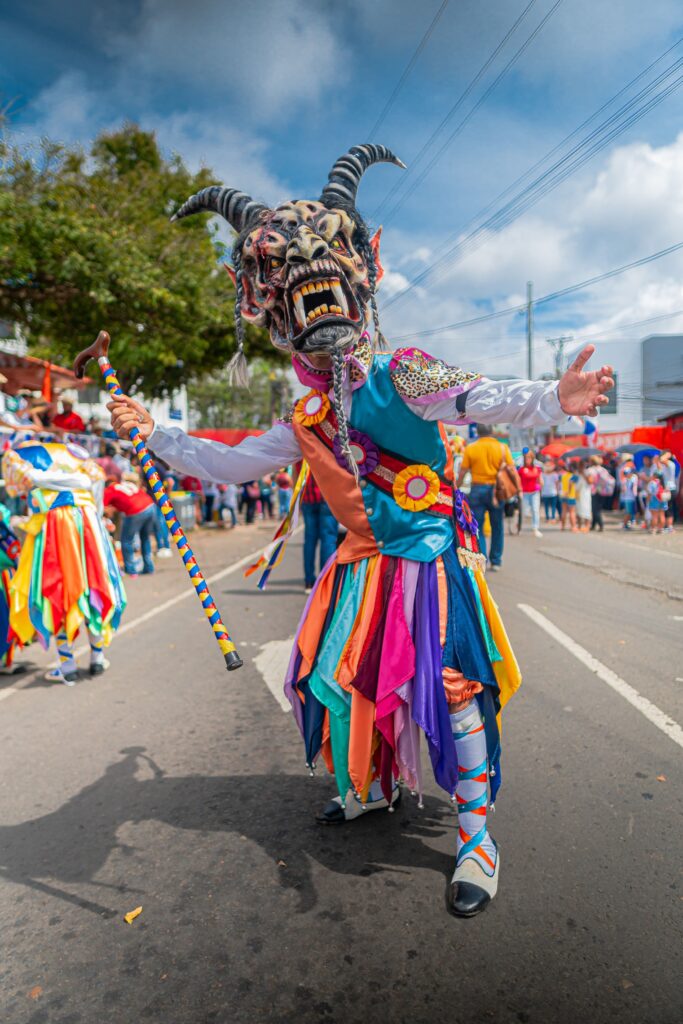
While every Dominican city has its carnival traditions, Santiago’s are defined by one unmistakable character: the Lechón. These carnival figures are unlike anything else in the Caribbean — elaborately costumed performers wearing handcrafted papier-mâché masks that represent pig faces with long duck-bill snouts, tall horns covered in smaller spikes, and an expression that is not terrifying but rather cheerfully mischievous.
The Lechones (literally “suckling pigs”) are the guardians of the carnival — historically they opened the parade, clearing a path for the floats and comparsas behind them. Each Lechón wears a brightly colored, bead-encrusted costume with bells and bows, and carries a sisal rope whip (fouet) that makes a threatening crack when swung. Their masks are handcrafted masterpieces — some taking months to make — and represent neighborhood identity. The two main groups come from Santiago’s historic barrios of La Joya (the Joyeros) and Los Pepines (the Pepines), each with distinct mask styles and colors.
Beyond the Lechones, the carnival features elaborate comparsas — themed dance groups with synchronized choreography, theatrical costumes, and live music. Each comparsa represents a neighborhood group, cultural association, or creative team. Recent editions have featured Egyptian-themed comparsas, Greek mythology troupes, and African-inspired groups alongside traditional Dominican themes.
The Carnival King and Queen officially open each parade, crowned weeks before the main events. The coronation ceremony is itself a major cultural event in Santiago. The King and Queen lead the grand finale parade on March 1, the most attended event of the entire carnival season.
2027 Santiago Carnival — dates to plan for
Where to watch Carnival de Santiago
- Parque Central de Santiago: The main stage since 2025 — upgraded logistics, designated viewing areas, more security, and better organization than the old avenue route. The best spot for first-time visitors
- Avenida Las Carreras: The historic parade route — still used for some sections. More of a street-party atmosphere, best for locals who know the route
- Along the parade route: Local families set up chairs and sound systems along the entire route — arriving early to claim a spot is the authentic local experience
Rooms go fast during carnival month · we can advise on the best Sunday to visit for the most authentic experience.
📸 @alcaldiadestgo on Instagram
The history behind the carnival
Carnival in Santiago dates back to the Spanish colonial era, though it has evolved dramatically over the centuries. The original celebrations were divided along class lines — the wealthy celebrated in private clubs while popular neighborhoods took to the streets. It was from those street celebrations in La Joya and Los Pepines that the Lechón tradition was born.
The Lechones started as actual carnival guardians — going ahead of the parade to clear the crowds and maintain order. Their distinctive pig-faced masks, unique to Santiago, became the symbol of the city’s carnival identity and distinguish it from every other carnival in the Dominican Republic. The elaborate craftsmanship of the masks — made by artisan families who pass the tradition down through generations — has been recognized as an intangible cultural heritage of the Dominican Republic.
Today the Santiago Carnival is one of the most important cultural events in the country, drawing visitors from across the Dominican Republic, the diaspora, and increasingly international tourists.
Tips for visiting Santiago Carnival
- Go to at least two Sundays: Each parade is different — different comparsas, different energy. The final parade (March 1) is the biggest and most theatrical
- Arrive early: Good spots along the route go fast. Aim to be in position 1 hour before the parade starts
- Wear comfortable clothes: You’ll be standing, walking, and possibly dancing for hours. Dress for heat and movement
- Stay aware of the Lechones: Their whips are traditional and mostly ceremonial — but they do crack them near the crowd as part of the show
- Bring cash: Street vendors selling food, drinks and souvenirs are everywhere. Small bills in RD$ are essential
- Take an Uber or walk: Driving and parking near the parade route is difficult. Hotel Platino is within easy distance of Parque Central
- Watch the coronation if you can: The crowning of the Carnival King and Queen is a separate event usually held in late January — check the Ayuntamiento de Santiago’s social media for dates
External resources
- Ayuntamiento de Santiago — official city hall, announces carnival dates and events
- GoDominicanRepublic.com — official DR tourism carnival guide
- DominicanRepublic365.com — event calendar and carnival details
Frequently asked questions
The Santiago Carnival takes place every Sunday in February, with the grand finale on or around March 1 (Dominican independence is February 27). The 2026 edition ran from February 8 to March 1. For 2027 dates, check the Ayuntamiento de Santiago’s official social media in December 2026.
Los Lechones are the iconic carnival characters unique to Santiago de los Caballeros. They wear handcrafted papier-mâché masks with pig-like faces, tall horns, and cheerful expressions, paired with brightly colored bead-encrusted costumes and bells. Historically they were the carnival guardians who opened the parade. They come from two historic Santiago neighborhoods — La Joya (Joyeros) and Los Pepines (Pepines) — each with distinct mask styles.
Since 2025 the main stage is Parque Central de Santiago, which offers better logistics, security, and viewing areas than the old route. The historic parade route along Avenida Las Carreras is still part of the celebration.
Yes — the Santiago Carnival is a free, open public street event. There are no tickets needed to watch the parades. You simply go to Parque Central or along the parade route on any carnival Sunday.
Book at least 6–8 weeks in advance. February is the most in-demand month for hotels in Santiago and rooms fill quickly once carnival dates are announced (usually in December–January). Contact Hotel Platino directly via WhatsApp at (809) 724-7576 to check availability and lock in your room.
Rooms fill fast during carnival · central location · easy access to Parque Central · 91 rooms.