Few cities in the Caribbean carry as much history as Santiago de los Caballeros. Founded in 1495 — just three years after Columbus first set foot in the Americas — it is one of the oldest continuously inhabited European settlements in the New World, a city shaped by earthquakes, colonization, independence battles, and an enduring cultural pride that still defines the Cibao Valley today.
This is the story of how Santiago became the Dominican Republic’s second city, its cultural capital, and one of the most historically significant places in the entire Caribbean.
The founding — 1495
Santiago de los Caballeros was founded in 1495 during the second voyage of Christopher Columbus, making it one of the earliest European settlements established in the Americas. The original settlement was located in what is now the San Francisco de Jacagua district — a few miles from the modern city center — on the north bank of the Yaque del Norte River.
The city takes its full name from the 30 caballeros — Spanish knights of the Order of Saint James — who relocated from the nearby settlement of La Isabela to Santiago in 1504. King Ferdinand of Aragon granted the city its Royal Privilege and heraldic coat of arms in 1508, cementing its status as one of the crown’s most important New World settlements.
It holds the distinction of being the first city in the Americas to bear the name Santiago — a name later adopted by Santiago de Chile and Santiago de Cuba.
The earthquake of 1562 — and a city reborn
In 1562, a catastrophic earthquake destroyed the original city of Santiago almost entirely. The surviving population was forced to relocate and rebuild several miles away, at the confluence of the Nibaje stream and the Yaque del Norte River — the site of the modern city.
Ruins of the original settlement are still visible today in the San Francisco de Jacagua neighborhood, offering a remarkable window into the city’s earliest days. For history enthusiasts, this area is one of the most underrated historical sites in the entire country.
Independence and the Battle of Santiago — 1844
Santiago played a pivotal role in the Dominican Republic’s struggle for independence. On March 30, 1844 — just weeks after the country declared independence from Haitian rule — the Battle of Santiago took place in and around the city. Dominican forces successfully repelled a Haitian counterattack, consolidating the young nation’s independence and establishing Santiago as a symbol of Dominican resilience.
This battle is commemorated annually and remains one of the most important dates in the city’s civic calendar.
The War of Restoration — 1863–1865
Less than two decades after independence, the Dominican Republic was briefly annexed by Spain in 1861. Santiago became the epicenter of resistance during the subsequent War of Restoration — a guerrilla conflict fought primarily in the Cibao region that successfully drove out Spanish forces by 1865, restoring Dominican sovereignty.
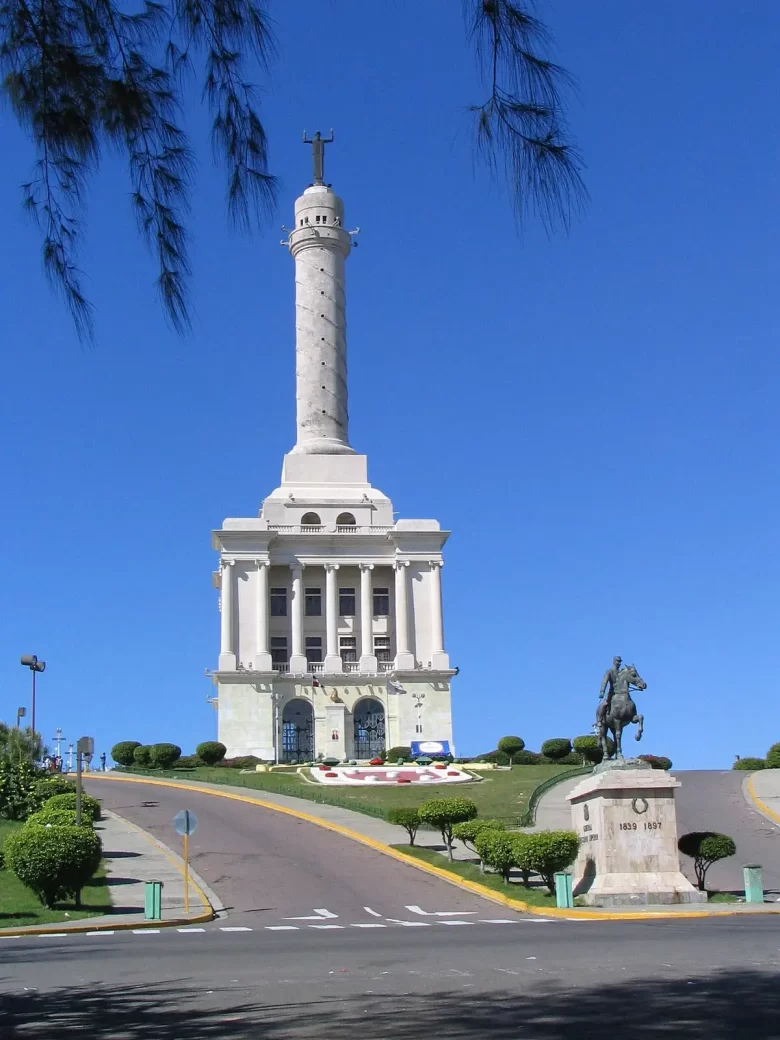
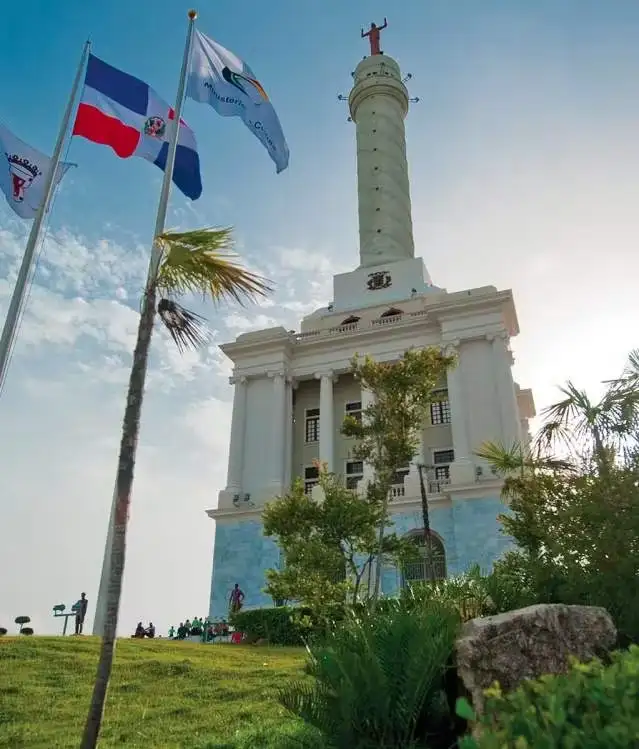
The Monument to the Heroes of the Restoration — the city’s most iconic landmark — was built to honor those who fought and died in this war. Standing 67 meters tall on a hilltop overlooking the Cibao Valley, it remains the most powerful symbol of Santiago’s identity.
Santiago’s key historical timeline
Christopher Columbus establishes the first settlement during his second voyage. First city in the Americas to be named Santiago.
Thirty Spanish noblemen (caballeros) relocate from La Isabela, giving the city its full name: Santiago de los Caballeros.
A major earthquake levels the original settlement. Survivors rebuild at the current location on the Yaque del Norte River.
Dominican forces repel a Haitian counterattack weeks after independence is declared, cementing the new nation’s sovereignty.
Santiago becomes the heart of resistance against Spanish reannexation. Dominican forces win by 1865, restoring independence.
The iconic 67-meter monument is inaugurated, becoming the defining symbol of Santiago and the Cibao Valley.
Santiago’s cultural and economic legacy
Beyond its political history, Santiago built its modern identity on tobacco, rum, and textiles. The Cibao Valley’s fertile soil made it the Dominican Republic’s agricultural heartland, and Santiago grew as the commercial center of this wealth. The city’s tobacco industry — still thriving today — produced some of the finest cigars in the Caribbean, a tradition that continues with brands exported worldwide.
The city is also home to the Centro León, one of the finest cultural institutions in the Caribbean, which houses permanent exhibitions on Dominican art, natural history, and the country’s cultural evolution. A visit to Centro León is essential for anyone who wants to understand how Santiago became who it is.
Santiago today
Modern Santiago is the Dominican Republic’s second city in every sense — population, commerce, culture, and education. It is home to major universities including the Pontificia Universidad Católica Madre y Maestra (PUCMM), founded in 1962, and produces graduates who shape the country’s professional and political life.
The city hosts the famous Carnaval de Santiago — one of the most vibrant carnival celebrations in the Caribbean — every February, filling the streets with the lechones (traditional masked figures) and the rhythms of merengue and perico ripiao that have defined Cibao culture for generations.
Walk to the Monument, the Cathedral, and Parque Duarte from our central location.
Frequently asked questions
Santiago de los Caballeros was founded in 1495 during Christopher Columbus’s second voyage to the Americas, making it one of the oldest European settlements in the New World.
The name means “Saint James of the Knights.” It refers to the 30 Spanish noblemen (caballeros) from the Order of Saint James who relocated from the settlement of La Isabela to Santiago in 1504, giving the city its distinctive name.
The original settlement was destroyed by a major earthquake in 1562. Survivors relocated and rebuilt the city at its current location on the Yaque del Norte River. Ruins of the original settlement are still visible today in the San Francisco de Jacagua district.
Santiago is known for its role in Dominican independence (Battle of Santiago, 1844), its central role in the War of Restoration against Spain (1863–1865), its tobacco and rum industries, and its Monument to the Heroes of the Restoration — the city’s defining landmark.
Santo Domingo was founded in 1496, one year after Santiago (1495), making Santiago technically older. However, Santo Domingo was established as the colonial capital and grew to become the larger and more politically prominent city.
The top historical sites include the Monument to the Heroes of the Restoration, the Cathedral of Santiago el Mayor (facing Parque Duarte), the San Luis Fort (now a museum), Centro León cultural center, and the San Francisco de Jacagua ruins — remnants of the original 1495 settlement.
Central location · on-site restaurant and casino · the ideal base for history and culture lovers.